How to Curl Hair With Straighteners: 6 Steps to Bouncy Curls
A step-by-step guide to curling hair with straighteners: prep, the right heat, clamp-and-twist and ribbon techniques, plus fixes for curls that drop.
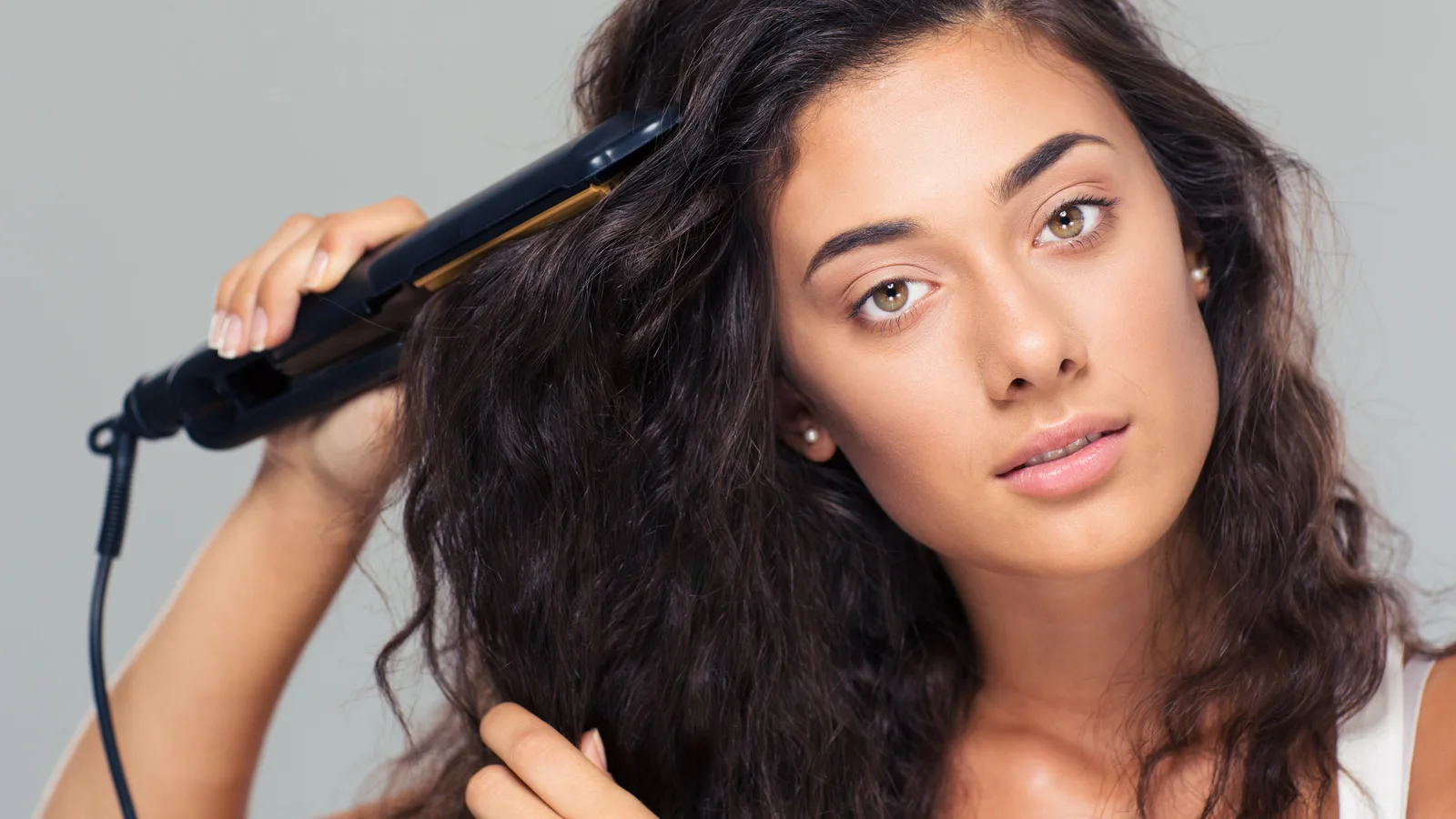
The short answer: clamp, twist, glide, cool
You don't need a curling tong to get curls — a pair of straighteners will do it, provided the plates have rounded edges. The method is simple: work on dry hair in sections no wider than your plates, clamp the straightener a few centimetres from the root, twist it half a turn so the hair wraps around the barrel, then draw it slowly down the length.
Let each curl fall into your cupped hand and hold it until it is completely cool before you touch it again. That cooling step is the difference between curls that last all evening and curls that drop before you've finished your makeup.
What you need before you start
You can do this with very little kit, but the small extras are what stop the whole thing turning into a fight with your hair.
- Straighteners with adjustable heat. Variable temperature matters much more than a high maximum.
- A fine-tooth comb for detangling and distributing product.
- Sectioning clips or hair grips to keep the rest of your hair out of the way.
- A heat protectant spray or serum you'll genuinely use on every section.
- A heat-resistant mat or a cleared worktop for the hot tool.
- A mirror you can see the back of your head in, or a second pair of hands for the back sections.
- Optional: a light hairspray or texturising spray, and a few pins if you want to pin each curl while it cools.
Prep: the part most people rush
Curls made on damp or product-heavy hair never hold, so start with hair that is 100% dry — roots included. Wash and dry earlier in the day if you can; hair that's still warm from the hairdryer is more pliable, but any lingering moisture will steam under the plates and rough up the cuticle.
Comb the whole head through first, then apply heat protectant section by section rather than in one heavy cloud over the top. A light, even coating is what you're after: saturated patches go stiff and crunchy, and they don't curl any better.
Divide the hair into four quadrants — two at the back, one at each side — and clip three of them away. Working in an organised order stops you re-curling sections you've already done and missing the ones underneath.
How to curl hair with straighteners in 6 steps
-
Section the hair
Work on completely dry hair. Divide it into four quadrants, clip three out of the way, then take working sections about 2–3 cm wide and no thicker than the straightener plates. If the section is fatter than the tool, the heat never reaches the middle and the curl falls out.
-
Protect each section
Spray heat protectant onto the section from 20–30 cm away and comb it through so it's evenly spread. Don't soak the hair — damp patches sizzle and leave a stiff, tacky finish.
-
Clamp, leaving the ends out
Hold the straightener horizontally and clamp the section roughly 5 cm from the root, plates closed. Leave the last 2–3 cm of ends outside the plates for now: clamped, dragged ends are exactly what makes a curl look straight and frazzled at the tip.
-
Twist half a turn and glide
Rotate the straightener 180° — half a turn — away from your face so the section wraps around the barrel. Draw the iron down the length in one slow, steady movement with gentle tension. Don't pause mid-glide; a pause leaves a dent. As you reach the ends, roll the iron slightly to catch them lightly.
-
Catch the curl and let it cool
Slide the iron off and let the curl fall into your cupped hand, coiling it upwards towards the scalp. Hold it there for 10–15 seconds, or clip it into a pin curl, until it feels completely cool. Hair sets in the shape it cools in — this is how you get hold without drowning it in hairspray.
-
Repeat, alternating direction
Work through every section, twisting alternate sections towards your face and away from it. Twisting everything the same way gives a stiff, uniform finish; alternating gives a looser, more natural wave. Leave the finished curls alone until the whole head is done.
Clamp and roll, or twist and pull?
| What to expect | Clamp and roll | Twist and pull |
|---|---|---|
| How it works | Clamp the mid-lengths, roll the iron up towards the scalp like a tong, hold a few seconds, then unwind downwards. | Clamp near the root, twist the iron half a turn, then glide straight down the section so the hair spirals around the barrel. |
| Best for | Defined, bouncy curls that keep their shape, especially on shoulder to mid-length hair. | Loose waves and beachy texture, and long hair where you want speed. |
| Curl shape | Rounder and more uniform, with a tighter bend towards the ends. | More open and ribbon-like, with a softer S-shape. |
| Difficulty | Easier to control; less risk of the hair slipping off the plates. | Needs a smooth, continuous pull — stopping creates kinks. |
| Watch out for | Over-rolling at the root, which leaves a kink close to the scalp. | Letting the ends slip out too early, which leaves straight tips. |
Pick the right heat for your hair
- Fine, bleached or damaged hair
- 150–160°C — one slow pass is enough
- Normal or colour-treated hair
- 170–180°C
- Thick, coarse or naturally curly hair
- 180–200°C
- Ceiling to stick to
- 200°C, even if your straightener goes higher — past that you're adding damage, not hold
- Strand test
- Curl one section at the back, let it cool completely, then check the shape and shine before doing the rest
Start lower than you think you need. If the curl still holds once it's cooled, the temperature is right. If it drops within minutes, go up 10°C rather than pressing harder or passing over the same section twice — repeated passes on one section damage the hair far faster than a slightly higher single pass.
What usually goes wrong — and how to fix it
| Problem | Likely cause | The fix |
|---|---|---|
| Curls drop within the hour | The hair was released while still warm, or the sections were too thick. | Re-curl in smaller sections, hold each coil until cold, and finish with a cool shot. |
| Sharp kinks or dents | The iron was paused mid-glide, or clamped hard on one spot. | Keep the iron moving at a steady pace and never stop with hair clamped between the plates. |
| Frizz and flyaways | Heat too high, no protectant, or too much handling after curling. | Drop the temperature by 10–20°C, use protectant on every section, and stop combing once curled. |
| Curls look stiff and uniform | Every section was twisted the same direction. | Alternate the twist direction section by section, front to back. |
| Straight, frazzled ends | The ends were clamped and dragged through the plates. | Leave the last 2–3 cm out, then roll the ends in lightly at the end of the glide. |
| Curls fall out by lunchtime | Heavy product on the roots, or styling on very clean, slippery hair. | Style second-day hair, use a light texturising spray at the roots, and avoid oils before styling. |
Safety: hot plates and wet hair don't mix
A few habits worth building:
- Never use straighteners on damp hair unless the manufacturer explicitly says the tool is designed for it. Water plus hot plates means steam, and steam means damaged cuticles and scald risk.
- Unplug after use and let the iron cool completely before putting it away — never coil the cord around hot plates.
- Keep the tool away from the sink and bath, and never handle it with wet hands.
- Check the cord for splits or exposed wire before you start; a damaged cord on a high-draw appliance isn't worth the risk.
- Test on hair extensions first on a low setting, and don't use straighteners on hair that's had certain chemical treatments without checking with your stylist.
- Keep it out of reach of children, and don't leave a hot iron unattended mid-styling.
Making the curls last all day
Once the whole head is curled and cool, break the curls gently with your fingers — don't brush them out, which turns a wave into a fuzz. A light mist of hairspray held 20–30 cm away is enough for most hair; anything heavier makes the curl feel stiff and drop faster.
If your hair loses curl quickly, pin each section while it cools instead of holding it in your hand, and leave the pins in while you do your makeup. For humid days, keep a texturising spray at the roots and resist the urge to keep touching the curls — hands transfer oil and break the shape. At night, gather the hair into a loose, high ponytail so the curls aren't crushed against the pillow.
Frequently asked questions
Can I curl my hair with any pair of straighteners?
Most straighteners can do it, but the plate edge matters. Rounded edges and a curved body let the hair slide off in a spiral; sharp square edges tend to leave a crease where the hair exits the plates.
How long should I hold the straightener on each section?
Only as long as a single slow glide from root to tip takes — a few seconds. Holding the iron still on one spot is what creates dents and concentrated heat damage.
Is it better to curl freshly washed hair?
Second-day hair usually holds a curl better because it has a little natural grip. If you've just washed it, make sure it's bone dry and use a light texturising spray rather than a heavy oil or serum.
Why do my curls look frizzy at the ends?
Usually because the ends were clamped and dragged, or the iron was too hot. Leave the last couple of centimetres out of the plates and only roll them in briefly at the end of the pass.
Can I use straighteners on wet hair?
No. Unless the manufacturer states the tool is designed for damp hair, water under hot plates creates steam, which roughs up the cuticle and can scald. Always dry the hair first.
Do I need hairspray to make curls hold?
Not always. A proper cool set does most of the work. If your hair is naturally slippery, a light mist held well away from the head, or a texturising spray at the roots, is usually enough.
Related articles
How to apply foundation: 7 steps to an even finish
A step-by-step guide to the best way to apply foundation: prepping skin, matching your shade, choosing the right tool and fixing streaks and caking.
How to clean silver at home: safe steps for real shine
Silver darkens as it tarnishes, but you can bring the shine back safely. Here is the gentlest way to clean silver jewellery, cutlery and ornaments.
How to moisturise skin: the routine that actually works
Damp skin, the right order and the right formula: a simple, dermatologist-friendly guide to moisturising your face and body properly.